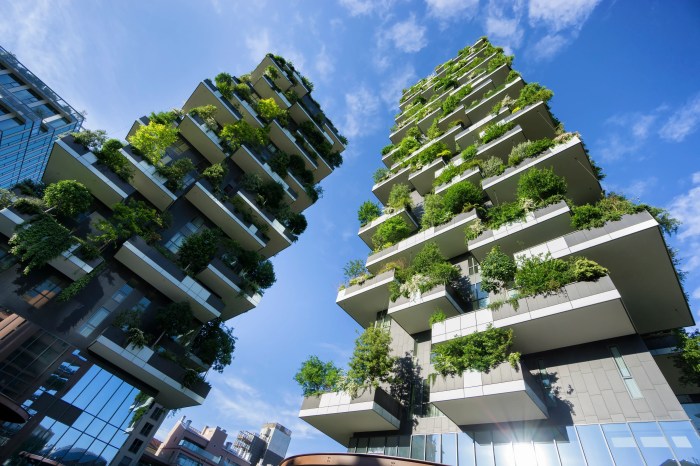
Kicking off with Green building and sustainable design, this opening paragraph is designed to captivate and engage the readers, setting the tone casual formal language style that unfolds with each word.
Exploring the concepts of green building and sustainable design, we delve into the importance of environmentally friendly practices in construction projects and the use of sustainable materials.
Green Building
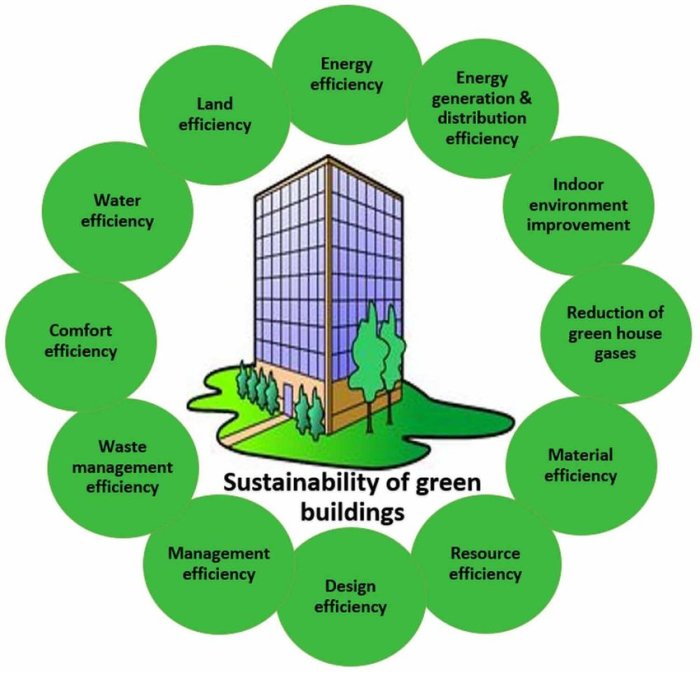
Green building refers to the practice of designing, constructing, and operating buildings in an environmentally responsible and resource-efficient manner. It focuses on reducing the overall impact on human health and the environment throughout the building’s lifecycle.
Importance of Green Building
Green building is essential for promoting sustainability and reducing the carbon footprint of the construction industry. By utilizing eco-friendly materials and energy-efficient technologies, green buildings help conserve resources, improve indoor air quality, and minimize waste generation.
Sustainable Materials in Green Building
- Bamboo: A rapidly renewable resource that can be used for flooring, furniture, and structural elements.
- Recycled Glass: Used in countertops, tiles, and insulation, reducing the demand for new raw materials.
- Reclaimed Wood: Salvaged from old buildings or structures, providing a rustic and environmentally friendly option for flooring and furniture.
- Solar Panels: Harnessing renewable energy from the sun to power buildings and reduce reliance on traditional utility sources.
Benefits of Green Building Practices
- Energy Efficiency: Lower operating costs due to reduced energy consumption for heating, cooling, and lighting.
- Improved Indoor Air Quality: Using non-toxic materials and proper ventilation systems enhances occupant health and comfort.
- Resource Conservation: Minimizing water usage, waste generation, and environmental impact through sustainable design and construction practices.
- Long-Term Cost Savings: Although initial costs may be higher, the long-term benefits of green buildings in terms of energy savings and durability outweigh the upfront investment.
Sustainable Design Principles
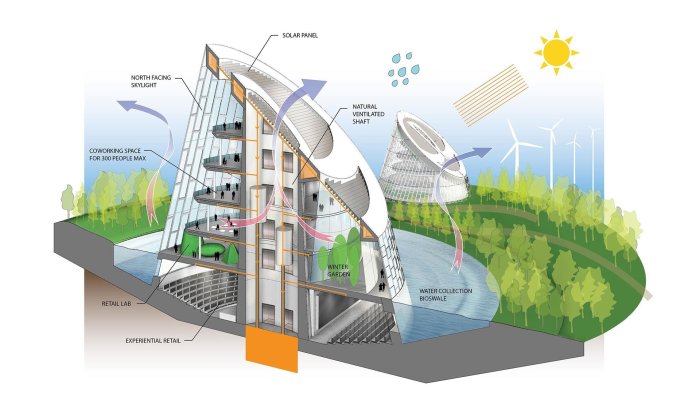
Sustainable design in architecture and construction refers to the practice of creating buildings and structures that minimize their environmental impact while maximizing resource efficiency and occupant comfort. It aims to reduce the overall carbon footprint and promote a healthier living environment for individuals. The significance of sustainable design lies in its ability to address pressing environmental issues, such as climate change, resource depletion, and pollution, by integrating eco-friendly strategies into the built environment.
Key Principles of Sustainable Design
- Energy Efficiency: Sustainable buildings are designed to optimize energy consumption by incorporating features like efficient insulation, natural lighting, and renewable energy sources like solar panels.
- Water Conservation: Sustainable design emphasizes the reduction of water usage through the implementation of water-saving fixtures, rainwater harvesting systems, and greywater recycling.
- Waste Reduction: Sustainable buildings aim to minimize waste generation during construction and operation by using recycled materials, implementing waste management strategies, and promoting recycling and composting practices.
Examples of Innovative Sustainable Design Solutions
Many buildings worldwide have successfully implemented innovative sustainable design solutions to reduce their environmental impact and promote sustainability. Some notable examples include:
- The Edge in Amsterdam, Netherlands, known as the greenest office building in the world, utilizes smart technologies to optimize energy consumption and promote a healthy indoor environment.
- The Bullitt Center in Seattle, USA, is a net-zero energy building that generates as much energy as it consumes through solar panels and other renewable energy sources.
- The Bahrain World Trade Center, featuring wind turbines integrated into its design to harness wind energy and reduce reliance on conventional power sources.
Green Building Certification
Obtaining green building certifications like LEED (Leadership in Energy and Environmental Design) involves a comprehensive process that evaluates the sustainability and environmental impact of a construction project.
Different Green Building Certification Programs
There are various green building certification programs available, each with its own set of criteria and standards. Some notable ones include:
- LEED (Leadership in Energy and Environmental Design): Focuses on energy efficiency, water conservation, sustainable materials, and indoor environmental quality.
- BREEAM (Building Research Establishment Environmental Assessment Method): Originating in the UK, it assesses a building’s environmental performance across various categories.
- Green Star: A certification system from Australia that evaluates the sustainability of buildings and communities.
Advantages of Green Building Certification
Having a green building certification for a construction project offers several benefits:
- Enhanced marketability: Green buildings are increasingly in demand as they demonstrate a commitment to sustainability.
- Cost savings: Energy-efficient buildings can lead to lower utility bills and operational expenses over time.
- Healthier indoor environment: Green buildings often prioritize air quality, natural light, and other factors that contribute to occupant well-being.
- Environmental stewardship: By reducing resource consumption and environmental impact, green buildings contribute to a more sustainable future.
Sustainable Materials
Sustainable materials play a crucial role in the construction industry, helping reduce environmental impact and promote a more eco-friendly approach to building projects.
Renewable and Recycled Materials
- Bamboo: Known for its rapid growth and renewability, bamboo is a popular choice for flooring, furniture, and structural elements.
- Recycled Steel: Using recycled steel in construction helps conserve natural resources and reduces energy consumption compared to producing new steel.
- Recycled Glass: Repurposing glass into countertops, tiles, and insulation reduces waste in landfills and conserves energy during the manufacturing process.
Benefits of Sustainable Materials
- Reduced Carbon Footprint: Sustainable materials typically have lower embodied energy, resulting in reduced greenhouse gas emissions during production.
- Resource Conservation: By using renewable and recycled materials, the demand for virgin resources is decreased, helping preserve natural ecosystems.
- Improved Indoor Air Quality: Many sustainable materials are non-toxic and emit fewer harmful chemicals, creating healthier indoor environments for occupants.
Challenges and Limitations
- Cost Considerations: Sustainable materials may come at a higher initial cost, posing a challenge for budget-conscious projects.
- Availability and Sourcing: Locating reliable suppliers of sustainable materials can be challenging, especially in regions where eco-friendly options are limited.
- Performance and Durability: Some sustainable materials may have different properties compared to traditional materials, requiring careful consideration for long-term performance.
In conclusion, Green building and sustainable design offer a promising path towards a more eco-friendly and efficient future in architecture and construction. Embracing these principles can lead to a greener and healthier planet for generations to come.
FAQ Explained
What are some benefits of incorporating green building practices?
Green building practices can lead to energy efficiency, reduced environmental impact, and healthier indoor spaces.
How can sustainable design principles be implemented in architecture?
Sustainable design principles can be implemented through energy-efficient systems, water conservation methods, and the use of recycled materials.
What is LEED certification and why is it important?
LEED certification recognizes buildings that meet high standards of sustainability and environmental performance, showcasing a commitment to green practices.


